Guides3 min read
How to Read Your First Chinese Story for Kids: Start With Words They Already Know
Your child knows a few dozen characters and wants to read a story. Start with a book written only from characters they already know, keep pinyin and English switched off at first, and tap read-aloud when a line sticks.
Your child has learned a few dozen characters and comes to you in the evening holding a Chinese storybook. The first line stops them cold: half the characters are new. You want to help, but where do you start? Explain the pinyin and they remember the pinyin, not the characters; explain it in English and the story becomes an English lesson. How do you start your child's first Chinese story? Not by reading it to them — by handing them a story they can read on their own.
Hanzi Grove's 21 bilingual stories are built on that idea: every story is written only from characters your child already knows, and new books open one by one as they learn. Open a story and there are no surprise characters: every sentence is made of words they have already met in practice.
How do you know if a story is at the right level?
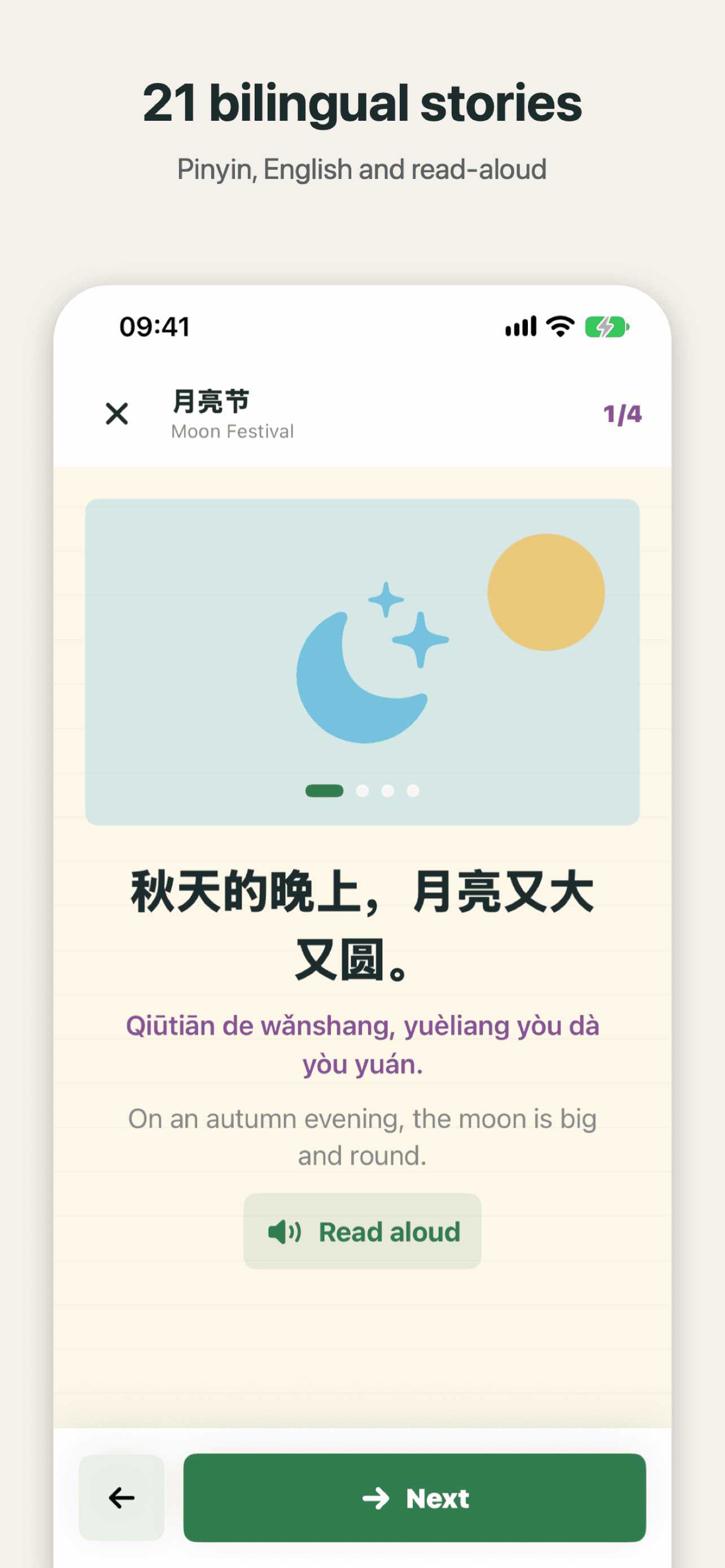
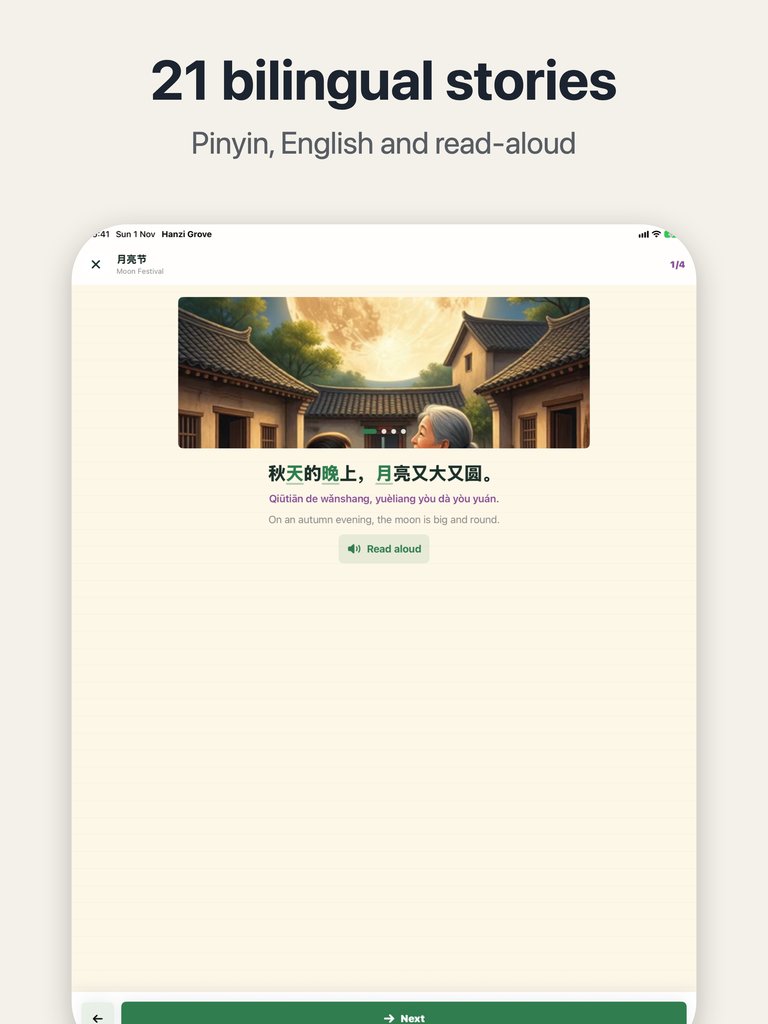
Take Moon Festival. The first page is a single sentence: "秋天的晚上,月亮又大又圆。" — On an autumn evening, the moon is big and round. Pinyin and English sit below the sentence, beside a picture of the moon rising over the village. The characters your child has already learned — 天, 晚, 月, 亮 — are shown in green. Your child looks at the picture, reads the sentence, and matches the characters they know one by one — the first page is done without stopping to look anything up.
How should pinyin and English be used, so they don't become a crutch?
Pinyin and English can be switched on or off at any time. Agree on how to use them before the first page: read the characters alone first, with both switched off. When a character sticks, tap Read aloud and hear it in Mandarin, then look at the character again. Open the English only when the meaning still won't come — it is the last resort, not the first thing to look at. After the story, switch pinyin back on and read it through again, picking up any characters that still feel shaky.
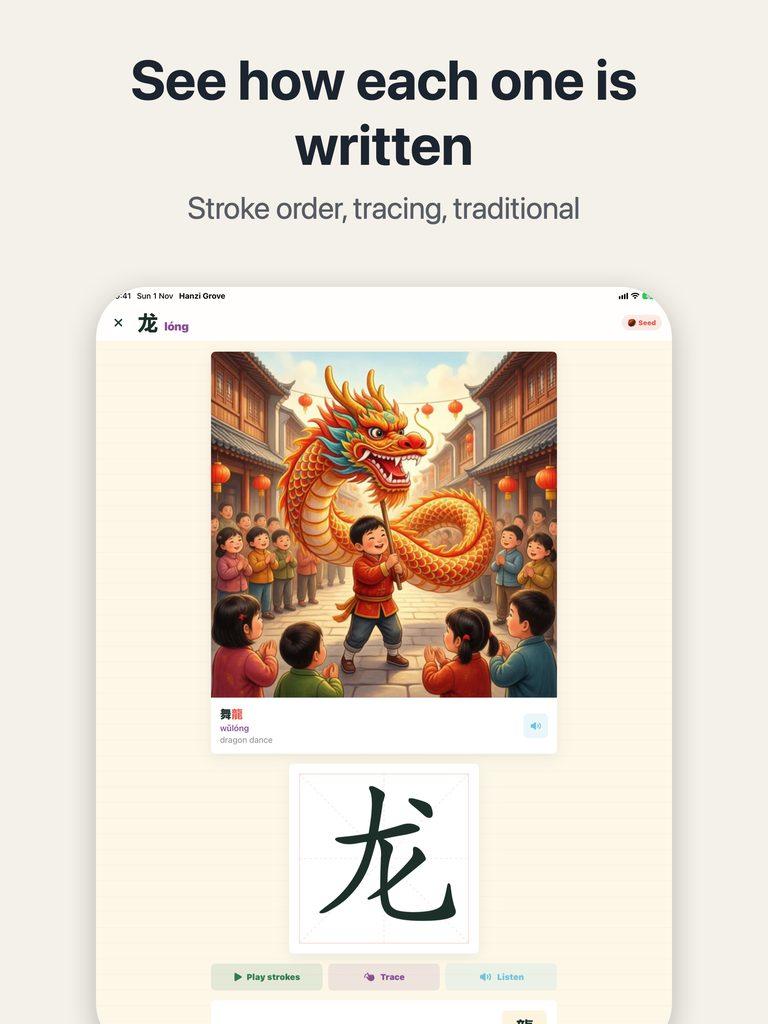
When a character still feels unsure, go back to the character cards: each one shows the stroke order, an example word and the sound. How Hanzi Grove's picture character cards teach a character one card at a time walks through what one card holds and how a child learns from it.
What if your child gets stuck halfway?
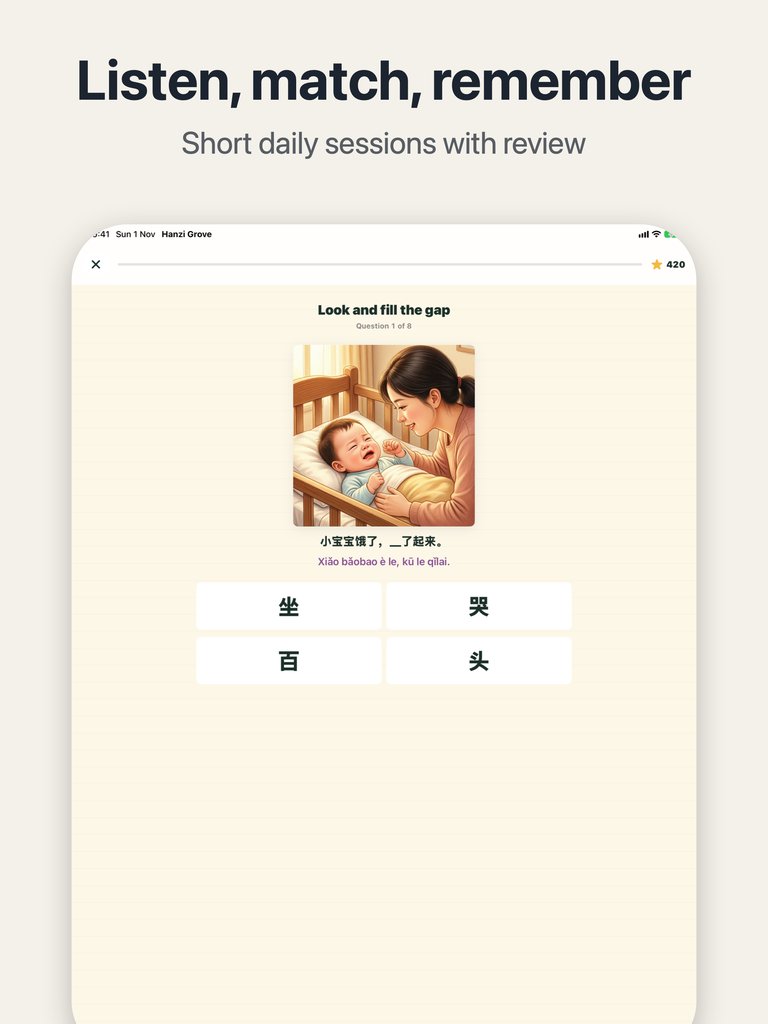
Don't push through. A daily session takes only a few minutes, and about a quarter of every mission brings back characters from earlier lessons, so the words keep coming back. The question in the picture is "Look and fill the gap": "小宝宝饿了,__了起来。" — the baby is hungry and starts to cry. Four choices — 坐, 哭, 百, 头 — and your child has to read the sentence and look carefully before picking 哭. A few minutes of practice first, then open the story: the reading goes much more smoothly when the characters for the day are already warm.
After one story, open the next
The 21 stories open one by one as your child learns, so the next book is made of characters they know too. When Moon Festival is finished, ask your child to read you their favourite line — not as a test, but so they can say out loud a sentence they just read on their own. A few minutes a day, one book after another, and the Chinese stories your child has read will keep piling up.
Try it tonight: open Hanzi Grove, open the first story your child has unlocked, switch pinyin and English off, and let them read the first page alone. You don't need to explain every character — just tap Read aloud when they get stuck. Once the first book is finished, your child will know a Chinese story is something they can read by themselves.

Hanzi Grove
Read your first 300 Chinese characters with stroke-order cards, pinyin, review and 21 bilingual stories.

 Scan with your iPhone