App updates2 min read
Chinese Characters with Multiple Pronunciations, Read the Way They're Taught
A character like 调 has two readings, and only the word tells you which one. Hanzi Grove 2.6 now reads every multi-reading character the way the app teaches it, on every voice, Premium voices included.
Your child misreads a sound, then misreads it again tomorrow
Your child is reading a story out loud and hits 调皮 — and says "diào pí." You correct it. The next day it comes out wrong again. It's not carelessness. 调 has two readings, tiáo and diào, and the word decides which one. That is the trouble with Chinese characters with multiple pronunciations: one shape, several sounds, and the word decides.
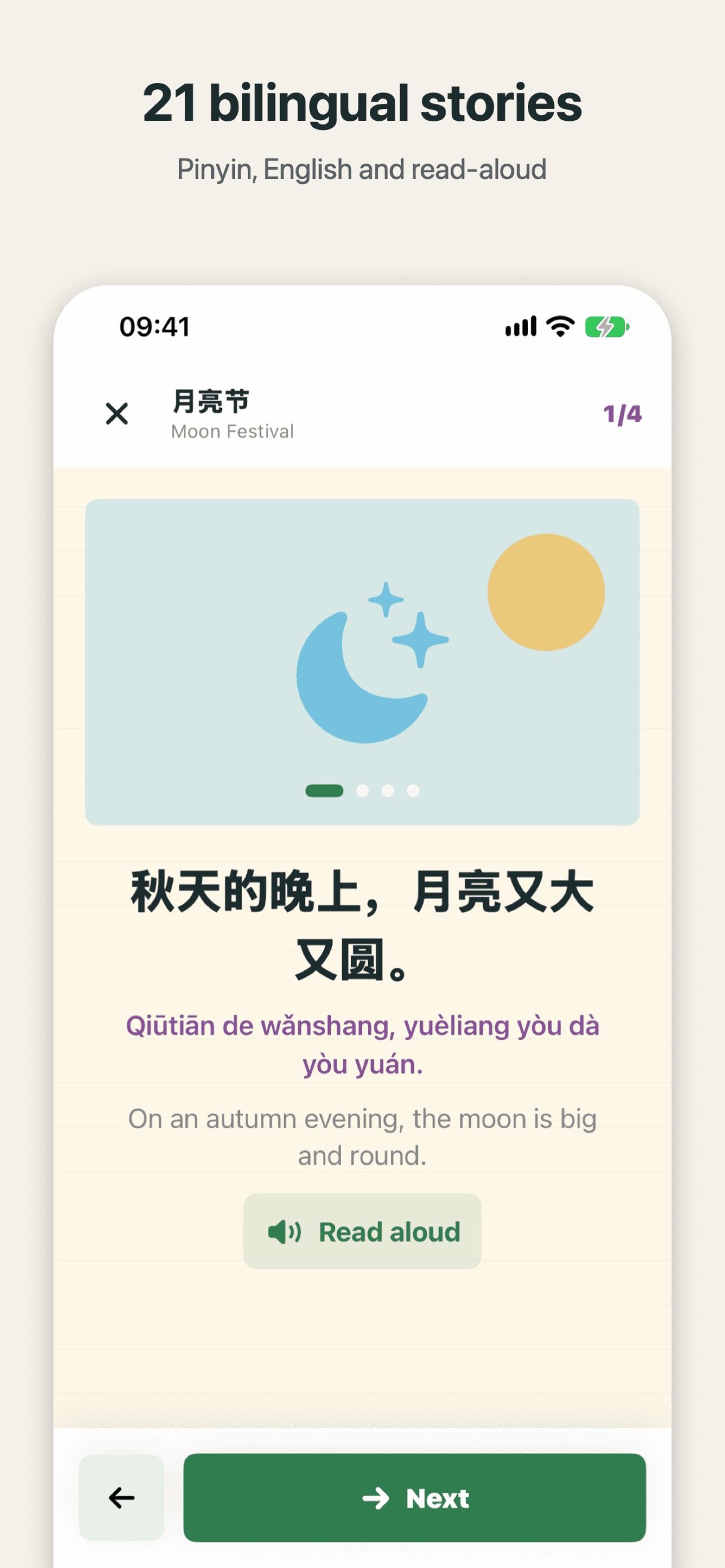
Hanzi Grove 2.6 fixes exactly that: characters with more than one reading are now read the way Hanzi Grove teaches them, on every voice, Premium voices included. What your child hears on a character card and in story read-aloud is the reading that belongs to that word.
Why do characters with multiple pronunciations keep tripping learners up?
One character, several readings, and the word picks the reading. 为 is wèi in 为什么 (why) and wéi in 成为 (to become). 教 is jiāo in 教书 (to teach) and jiào in 教育 (education). 调 is tiáo in 调皮 (naughty) and diào in 声调 (tone). The first reading a learner meets becomes the default, applied everywhere. Misreading isn't a failure — but left uncorrected, the wrong reading sticks.
How does Hanzi Grove teach the right reading?
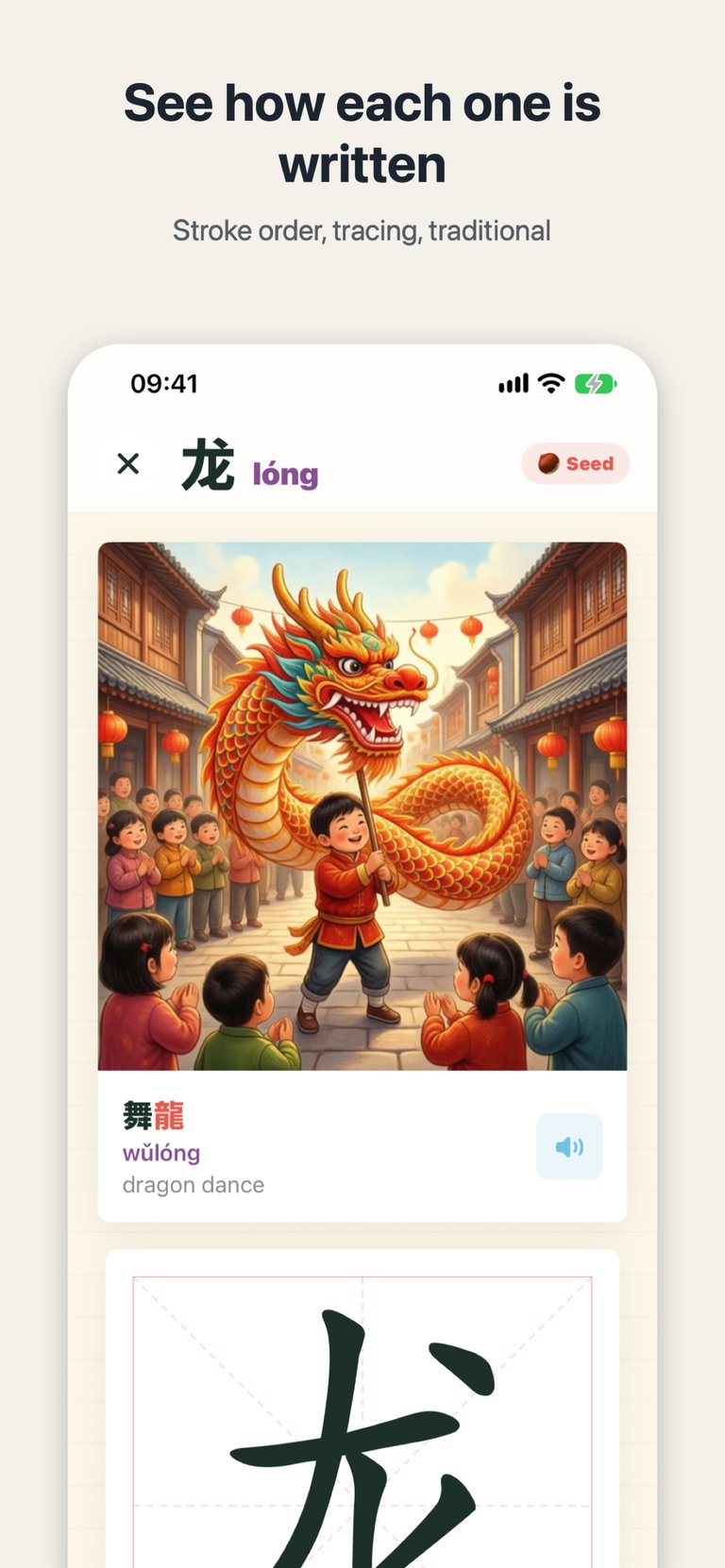
Open any character card: the character on top, its example word below. Tap it and you hear the reading that belongs to that word. The stroke-order animation writes it out stroke by stroke, and the tracing grid lets a finger follow along. The example word is the answer to which reading — same character, different word, different reading, and the child hears the word's reading, not a bare character on its own.
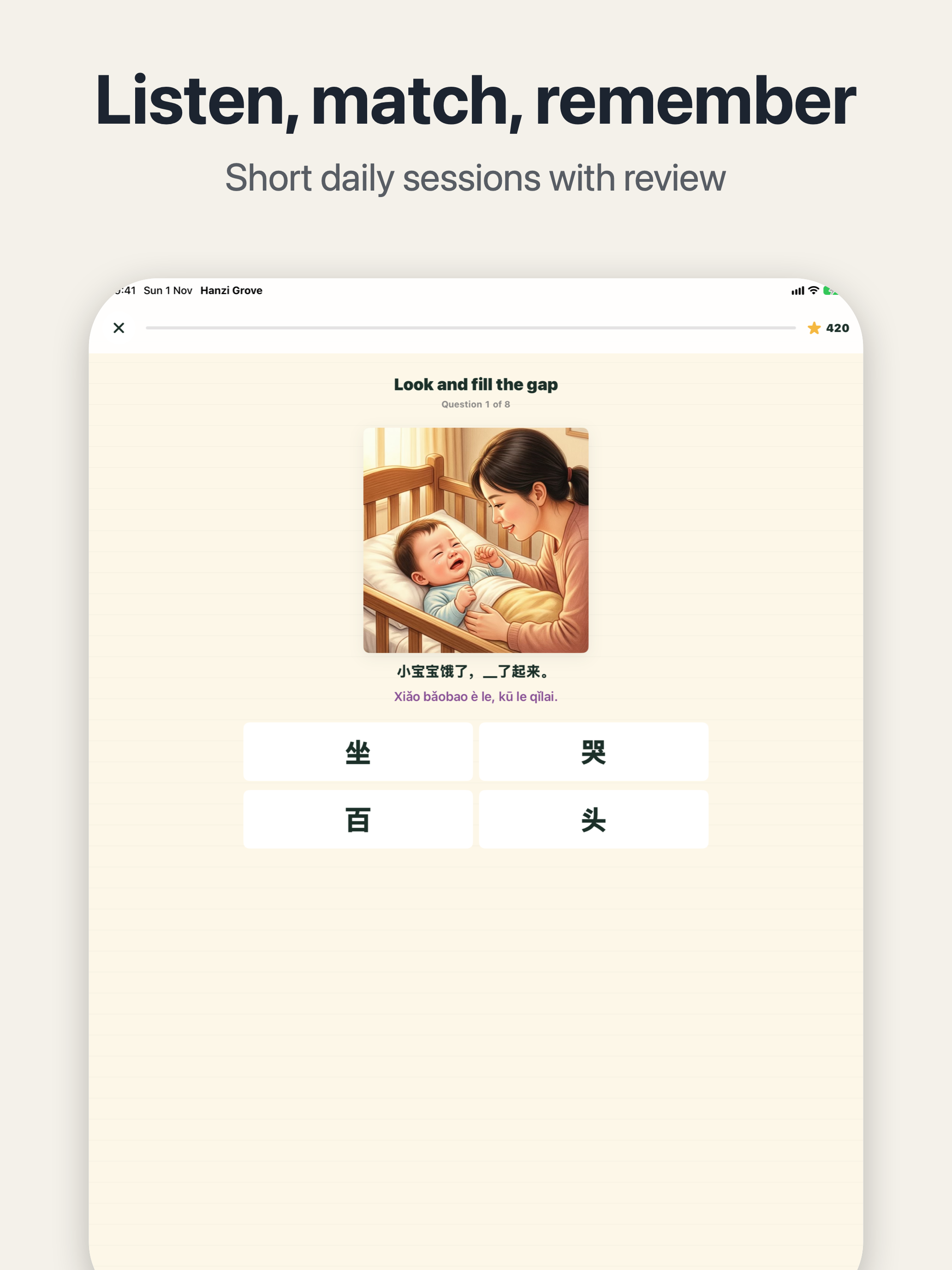
Practice works the same way. A few minutes a day; about a quarter of every mission brings back earlier characters, so nothing learned is left to fade. Listen and choose, and hear the reading inside a whole sentence. Hear 调皮 as tiáo pí and 声调 as diào often enough, and the reading sticks to the word.
How do I pick a Premium voice?
2.6 also clears up a smaller thing: the download tip in Settings › Voice. To use a Premium voice, go into the device Settings, tap the download button next to that voice, wait for it to finish, then pick it in Hanzi Grove's Settings › Voice. The old wording left people unsure where to choose — follow that order and it works.
Picture cards are where character learning starts in Hanzi Grove — I wrote earlier about how Hanzi Grove teaches characters with picture flashcards. Characters with multiple pronunciations are the next step: once the character is recognised, the reading still has to follow the word.
Update to 2.6 tonight, open a story your child is already reading, tap Read aloud, and listen for characters like 为, 教 and 调 inside their sentences. Hearing the right reading is what this update is for.

Hanzi Grove
Read your first 300 Chinese characters with stroke-order cards, pinyin, review and 21 bilingual stories.

 Scan with your iPhone