Guides3 min read
How to Prepare for the Australian Citizenship Test
To prepare for the Australian citizenship test, read the official testable material first, then take the 20-question sample test under its 45-minute timer — every Australian values question must be correct to pass.
Once your test date is set, one question matters most: how to prepare for the Australian citizenship test. The hardest part is not the questions themselves. It is knowing where to start. The study material is a whole book, advice online points in different directions, and after an evening of reading you still have no idea how close you are to passing.
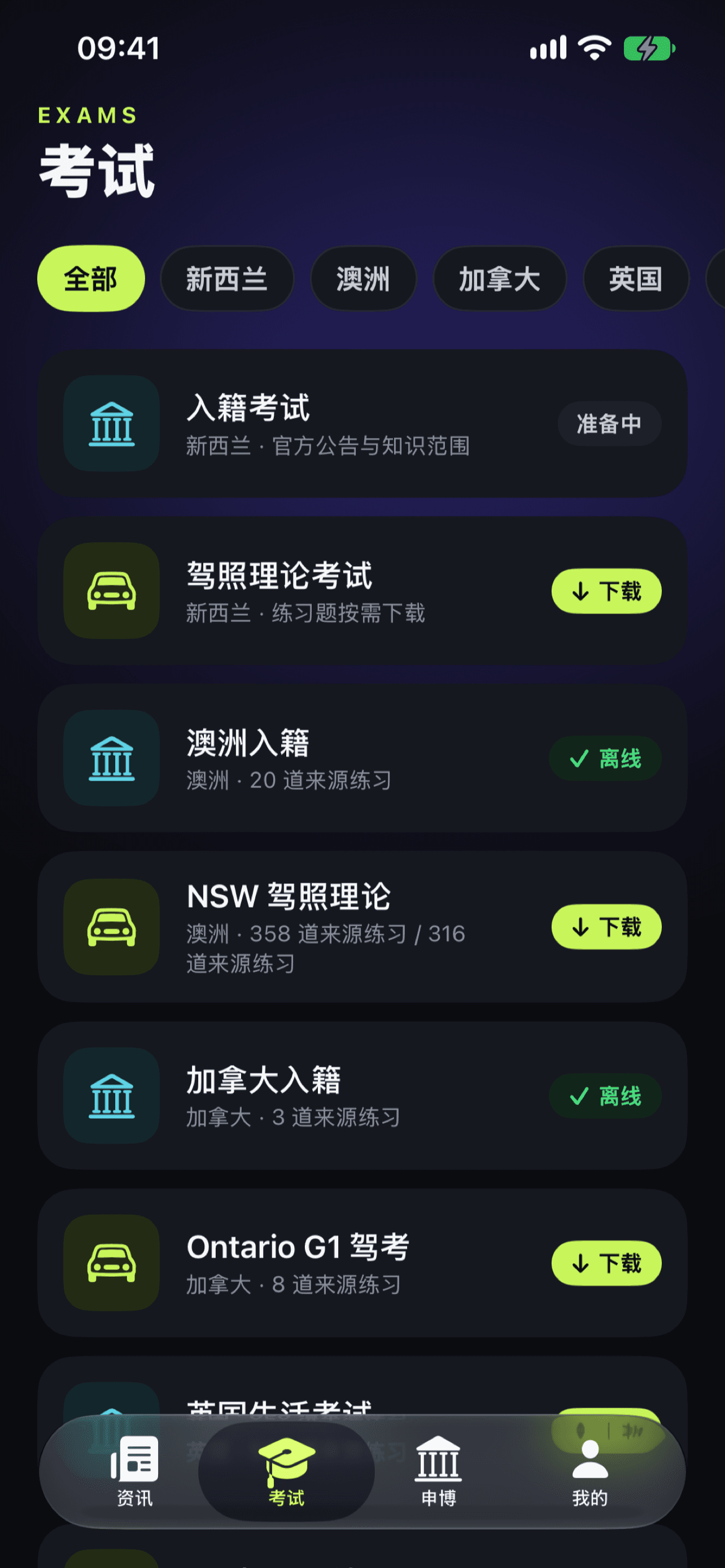
The way through is straightforward: to prepare for the Australian citizenship test, read the official testable material first, then practise with the official sample questions under test conditions. NextPath's Australian citizenship project holds both in one place — the complete testable text in five study materials, each paragraph in English with Chinese help alongside, and 20 official sample questions. The sample test runs 20 questions in 45 minutes, with its own timer, an overall pass mark, and one hard rule: every Australian values question must be correct.
What should you read first?
Open the study materials and the first one is "Australia and its people": 140 bilingual paragraphs. The second covers Australia's democratic beliefs, rights and liberties in 81 paragraphs; the third, Australian government and the law, in 171. Each paragraph shows the English original first, with Chinese help right after it, so a sentence you cannot follow in English is explained in the sentence next to it.
You do not have to finish all five in one sitting. Start with "Australia and its people" and read one paragraph at a time; the read count on the page moves from 0 of 5 as you go, so progress is visible instead of a feeling. Do not try to memorise. Remember what each paragraph is about — the sample questions will sort out what actually stuck.
Should you practise the sample questions first, or sit the test?
There are 20 official sample questions, and a correct answer moves you straight to the next one. Do the first round untimed, as practice: answer one, check it, and when you get one wrong, go back to the material and find the paragraph it came from. That tells you whether you never read it or read it and forgot it.
Then take the full sample test: 20 questions in 45 minutes, at the pace of the real thing. The timer is not there to rush you. It is there to show you, before the day itself, whether 45 minutes is comfortable for 20 questions and which kind of question slows you down.
Why must every values question be correct?
The sample test has two bars, not one: an overall pass mark, and every values question correct. Miss one values question and the test does not pass, even if your total is high enough.
So the material on democratic beliefs, rights and liberties deserves a second read on its own. At 81 paragraphs it is short, and once you have read it you know what the values questions are really asking. They are not testing whether you can recite a definition. They are testing whether you know the shared understandings Australian society runs on. Read that part properly and those questions stop being the place you lose marks.
How do you know when you are ready?
Nothing you practise disappears. The project page keeps three counts: how many of the 20 questions you have practised, how many are waiting for review, and how many you have saved. Questions you miss go to review; try them again in a few days, and only count them learned when you get them right the second time.
Once you have worked through all 20 sample questions and sat one timed run, you know where you stand. If you want to tell your family how the mock test went, you can turn the result into a card first — this post explains how NextPath makes a mock exam result into a share card that shows only the exam, the score, pass or not and the date, with nothing personal on it.
Start tonight with one small step: open "Australia and its people", read the first paragraph, and try two sample questions. The material and the questions are in the same place, so preparation does not mean hunting around.

NextPath
Official immigration news from five countries in English with Chinese, citizenship preparation and a computer science PhD guide.

 Scan with your iPhone